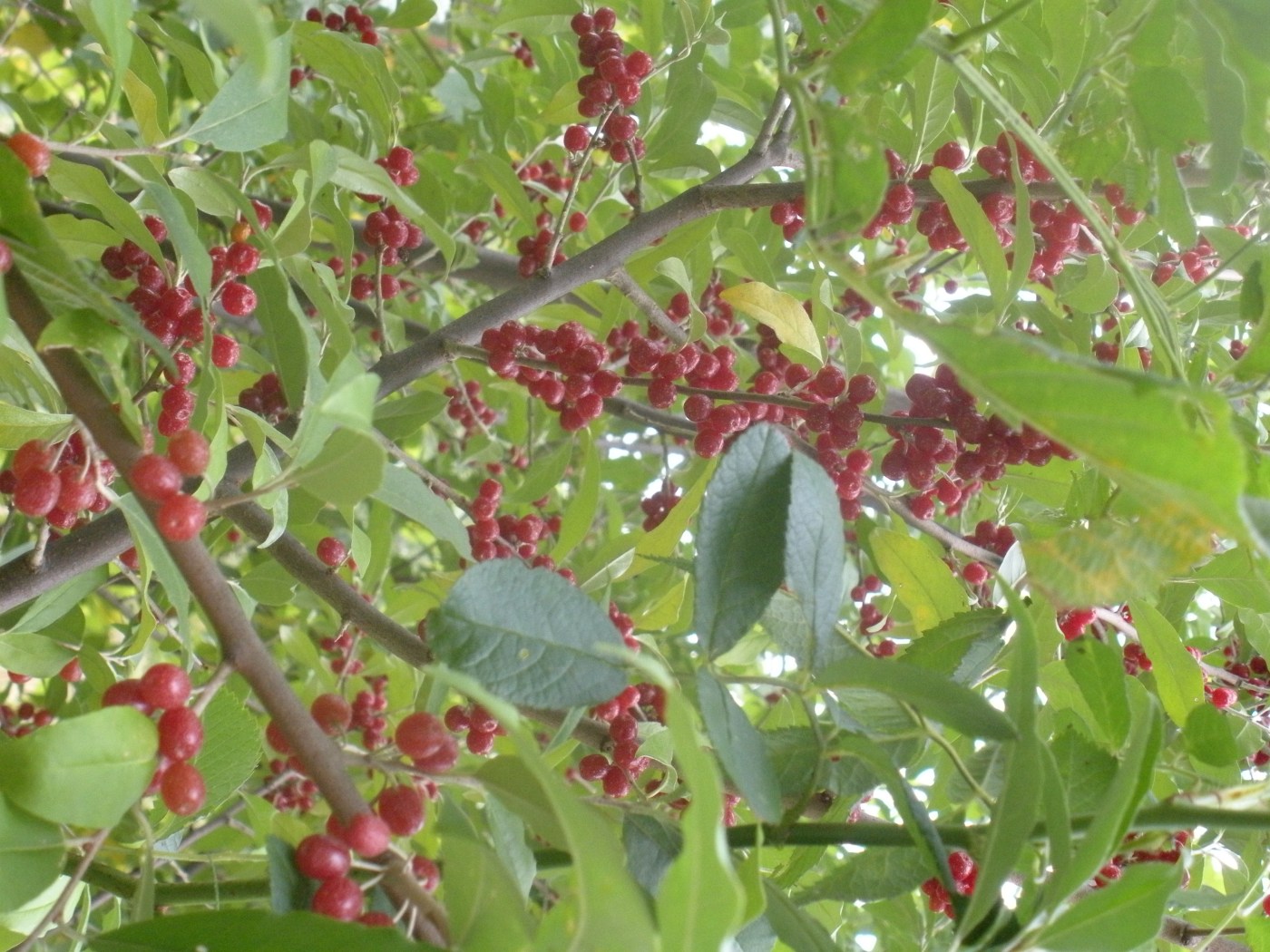
Autumn olive (Elaeagnus umbellata) was one of the first wild edible foods that I learned about and still remains one of my favorites. Also called autumn berry, it is a small tree/shrub that is considered invasive in many states and can be found along roadsides, fields, and open forests. The edible part of the plant are the red berries, which begin ripening mid-September in Massachusetts and continue into October. They are easily identified by the golden dots that cover them, along with their speckled leaves that have a silvery underside.


Russian olive is a different species from the autumn olive that is commonly found in the central and western U.S. Though olive is in the name, neither one of these is related to the Mediterranean olives that we know and love. Another cool thing about it is that it’s a nitrogen-fixing plant that is not a legume. It’s great to grow on your land or in your backyard that will benefit the other plants as well.
There aren’t any poisonous look-a-likes that I know of; the only other tree that people might confuse it with is the Tartarian honeysuckle which does not have speckles on the berries or the leaves, has inedible red berries joined in pairs, and blooms during the summer. Back to the autumn olive, the berries have a delicious tart and sweet taste and can be used to make jam, jelly, pies, fruit leather, sauce, you name it. They do get sweeter in October after the weather has cooled down, that’s when I recommend eating them. My favorite way to eat them is right off the tree. It might sound boring but I love them in their natural state. They make for a great trail snack. You can get creative and use them in any way you would use a berry. Some wild foragers even make them into a ketchup. The berries contain vitamins C and E, minerals, B-vitamins, fiber, and lycopene.
Lycopene is a nutrient that is often associated with tomatoes but autumn olive berries contain up to 18 times as much lycopene as tomatoes. Pretty impressive, right? See if you can find an autumn olive tree near you this fall and give the berries a try. Please follow wild crafting etiquette and don’t take more than what you intend to eat.
 A Spoonful of Garlic