
Next up we have plantain. This is not the banana looking vegetable you find in the supermarket but the common garden “weed”. It is both edible and medicinal. Anyone who has spent time outside will recognize this plant, since it grows everywhere. The part that herbalists use is the leaf. It’s too bad that it’s often mowed down every time it springs up because it is extremely useful in so many ways. This is definitely a plant everyone should get to know.
First, it’s wonderful in first aid. Think of it as the ultimate boo-boo plant. It is often taught to be used as a spit poultice, in which you pick a fresh leaf or two then chew it up and put the mash on cuts, scrapes, and insect stings to heal the area. It has strong drawing abilities, which is why it’s so useful for bites/stings, boils, or anything that needs to come out, even splinters. A poultice would ideally placed on the skin for 20-30 minutes and changed a few times per day.
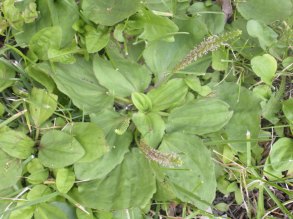
Plantain (Plantago major or Plantago lanceolata) is also extremely healing for mucous membranes. This means you can collect it and make it into a tea for any inflammatory conditions in the digestive tract, including the gums. Of course, it’s not the only thing to do for these conditions but it does bring relief. One of my favorite ways to use it is to infuse the leaves into oil to make a healing salve. It’s always good to have a salve in the cupboard as an alternative to store bought ointments that don’t contain any harmful additives.
Plantain leaves can also be eaten raw or cooked; best if collected when they are young since they get tough when they’re older. For medicinal purposes though, they can be collected anytime during the growing season while they are still green. They can also be dried or frozen for use in the winter.
How to dry: collect a bunch of plantain leaves, taking care not to rip them from the root but use scissors to cut them from the bottom of the plant. Wash them if you want, especially if you have dogs or lots of foot traffic in that area, and pat them dry with a towel or leave them in a colander to dry. You can then spread them on a baking sheet or a large sheet of any kind in a single layer and let them sit in a well-ventilated room. They are ready for storage in glass jars when they crumble if you touch them. You don’t want any moisture left in the leaves or it will encourage mold. Always remember to label your jars and use when needed.
A tea from the dried leaves can be used to soothe the stomach and heal the gut lining. This is nice if you have the condition leaky gut, since the intestinal lining is a mucous membrane. It can pretty much be mixed with any herb you want, but for the gut I would recommend marshmallow leaf, calendula, fennel, and/or spearmint.
Some herbalists mix fresh plantain leaves with a little water in a blender or food processor to make a paste, to then freeze in ice cube trays so they can have access to plantain in the winter. If you decide to do that, place the ice cubes in a plastic bag after they are frozen for long-term storage.
Another name for plantain was white man’s foot, since the Native Americans noticed it springing up wherever the settlers would go. Lucky for us it’s so abundant. When you see stalks growing from it that eventually contain seeds, those can be used as a fiber supplement. The psyllium seeds that you see in health food stores is actually harvested from a species of plantain. You can collect your own seeds in your very backyard. I have yet to do this myself, but a good idea nonetheless. If you have any experiences with plantain, share below!
 A Spoonful of Garlic