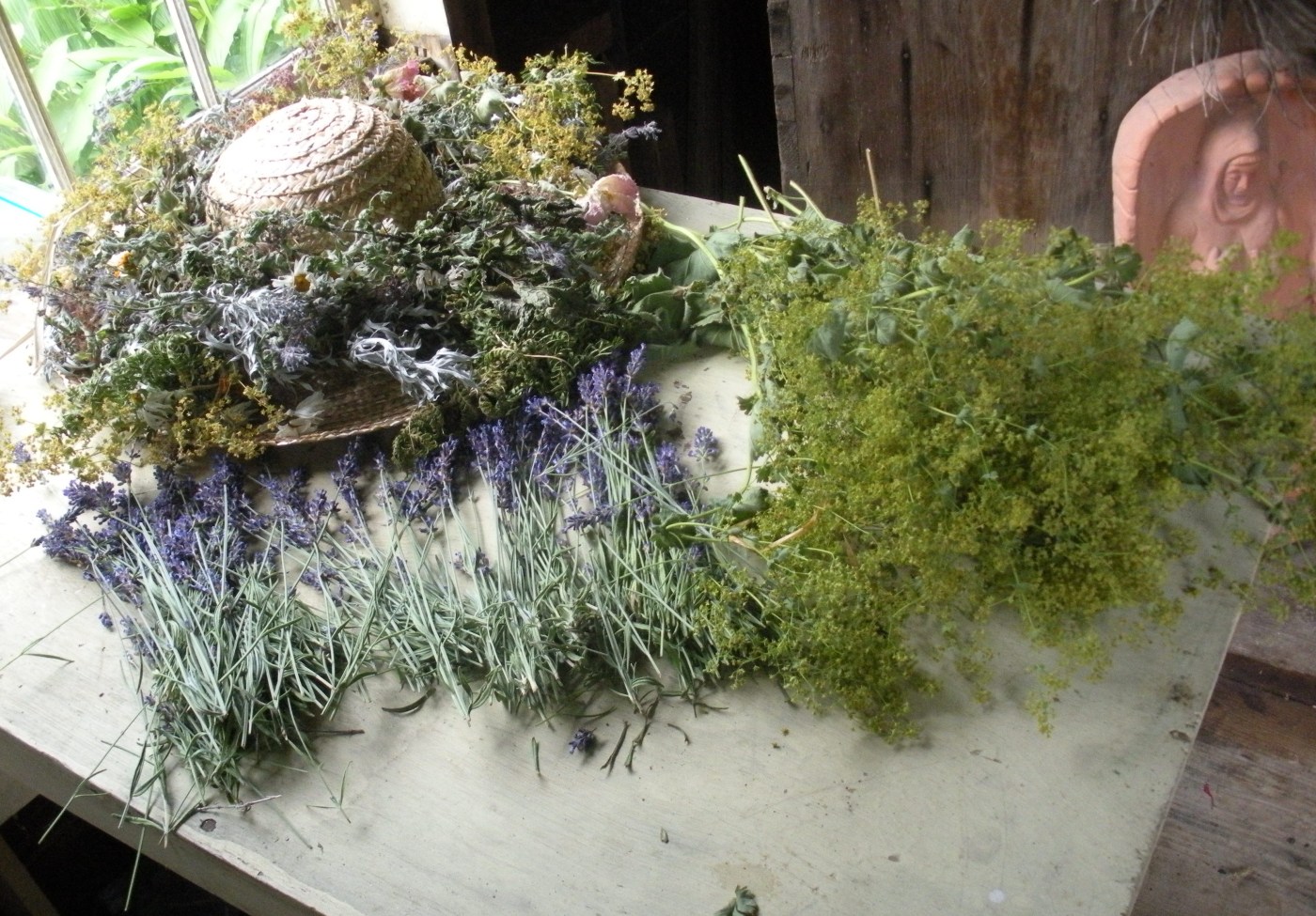
How to make an herbal tea:
A medicinal tea is a little different than placing a teabag in hot water and letting it steep for 3 minutes. The ratio for medicinal tea is 1 teaspoon of dried herb per 8 ounces of hot water. For fresh plant material, 2 tablespoons may be used per 8 ounces. As soon as hot water is poured over the herbs, cover the jar or mug and let steep for at least 15 minutes, then strain and drink. Herbs such as chamomile, mint, linden, and ginger make for gentle and safe daily teas.
How to make a decoction:
A decoction is a tea in which plant material is simmered in water for at least 10 minutes to break down the tough parts. This method is appropriate for roots, bark, seeds, and dried berries. Examples would be dandelion and burdock roots, dried hawthorn berries, and cardamom pods. You may use 1-3 teaspoons per 1 cup of water (8oz.) depending on the plant material. For example for a chai spice mix, a tablespoon can be used. For dried dandelion root, a teaspoon is sufficient. Simply place the herbs with the water in a small saucepan and simmer (partially covered) for at least 10 minutes. Simmering time varies depending on the plant.
How to make an infusion:
An infusion is a long steeped tea that extracts minerals from plants. Steeping time is at least 4 hours or overnight. Quart size glass jars are best for this method and the most convenient (1 quart= 4 cups). A french press may also be used. Use approximately 1 tablespoon of dried plant material per cup of water, which is 4 tablespoons for a quart jar. Place herbs in the jar then pour hot/boiling water over them and cover with lid. The most convenient way to make infusions is to prepare the tea the night before, strain in the morning, and drink throughout the day. Great herbs to make infusions with are nettles, red clover, dandelion leaf, and violet, to name a few.
How to make an infused oil:
There are many ways to make plant infused oils but they mostly involve placing plant material in a good quality oil such as extra virgin olive, grape seed, apricot kernel, sweet almond, or sesame oil and using heat to extract the medicinal properties. The process can take as little as 1 hour or up to 1 month. The general ratio is 1:2; one part plant material to 2 parts oil. You can use a stove top, oven, or sunlight, although sunlight is best for fresh plants and needs the longest to steep (at least 2 weeks).
For the stove top method, use a double broiler and place herbs with oil in a glass bowl on top of a saucepan that is filled with about an inch of water. You want the glass bowl to be bigger than the saucepan, not floating in the water. *The reason you don’t put herbs directly in a saucepan with oil is because it can heat too quickly and turn rancid.* Turn the heat on low to medium low, making sure the oil does not get too hot. Once it starts to smell like the herb it can be strained and stored in a glass bottle. The heat can be turned on and then off if you notice the oil getting too warm, or it can stay on low for the full few hours.
For the oven method, place herbs with oil in an oven safe glass bowl or glass jar without lid and let infuse for a few hours. If you have just baked something you can turn the oven off and place the herbs in there as the oven cools down. If the oven is still too hot, the door can be left open so the oil doesn’t burn. Strain and re-bottle when done, making sure to label with the type of oil and herbs used, and the date. Glass jars must be completely dry otherwise the moisture will cause the oil to go moldy.
Solar infused oils are best made with fresh plants that have been wilted for a day or two, to prevent molding from excess moisture. Plants that do well with this method are comfrey, plantain, calendula, St. John’s wort, and violet. The jar should be filled to the top and will work best if you place a couple layers of cheesecloth over it to let excess moisture escape, otherwise some people just cap it with the lid. Place in a sunny spot and let steep for 2-4 weeks.
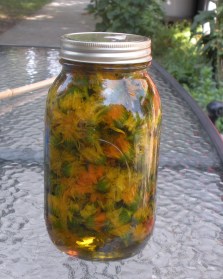
Infused oils generally last up to 1 year and should be stored covered in a cool, dry place and in glass instead of plastic. You can also add a teaspoon of pure vitamin E oil to preserve your infused oil.
How to make a tincture:
Tinctures are usually herbal extracts made with alcohol. Other extracts can be made with vinegar or glycerin. I’ll be sharing with you the folk method of how to make a tincture. For more specific measurements, please consult an herbal book listed in the resources section.
Take a clean pint-size or quart-sized mason jar and fill 1/3 of the way with the dried herb of choice. Pour 80 or 100 proof vodka or brandy over it, then fill to the top leaving 1/2 inch of space. Cover with the lid and let steep for 6 weeks in a cabinet or on a shelf. Then strain and re-bottle in a clean jar. Tinctures last for at least 5 years.
If your herb is fresh, fill most of the jar with the fresh herb and pour the alcohol over it until full. Steeping time is also 6 weeks. For dried herbs, don’t fill the jar all the way because there needs to be room for expansion. A vinegar preparation can be prepared the same way, although for the dosing you have to take twice as much.
 A Spoonful of Garlic