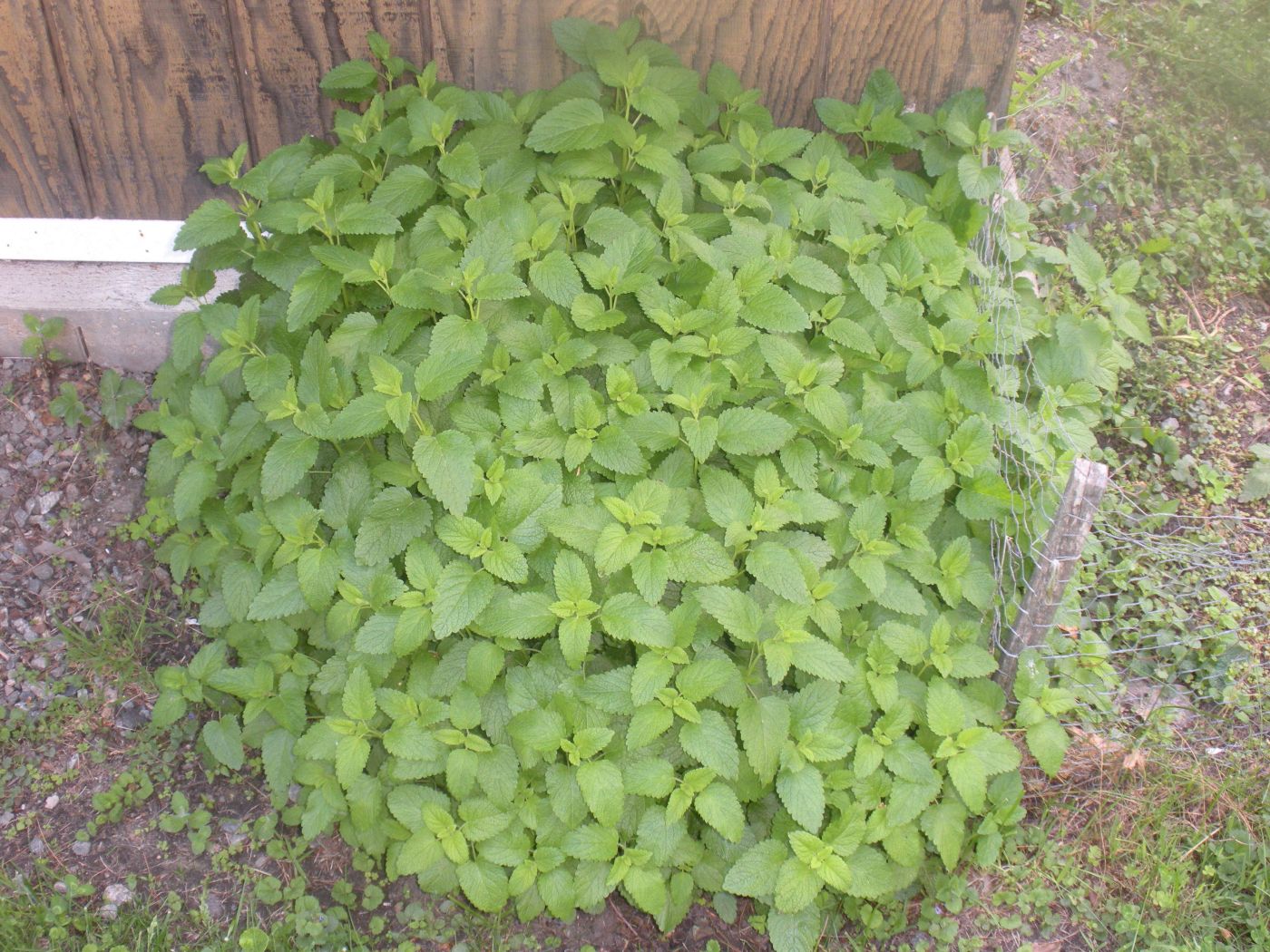
Latin name: Melissa officinalis
Parts used: leaves
Useful for: fever, nervousness, digestive trouble, herpes virus, melancholy
Dose: 1 teaspoon of dried herb or several fresh leaves per cup of hot water
Lemon balm is a must have herb in the garden. It is easy to grow and doesn’t need much attention once it gets going. A member of the mint family, it usually grows as a perennial in most climates and will do well to proliferate on its own. It has a delicious lemony floral scent and flavor that is perfect for summer. It’s easy to dry as well, but there’s nothing like fresh lemon balm tea. This is an herb that I wouldn’t really recommend to buy dried from an online company, only because it loses its potent flavor the longer it sits on a shelf.
Lemon balm is considered a diaphoretic, which means it helps to lower a fever by opening up the pores of the body. It is gentle enough for children and safer than over the counter medications that work by stopping your body’s natural healing response. On a hot summer day, you can make an iced lemon balm tea to help cool you down and keep hydrated. Since lemon balm is considered cooling, it is not recommended for those who suffer from hypothyroidism, though some opinions on this vary. Nevertheless, I’m passing on what other practitioners have said, and just to be safe consult with your provider before using lemon balm if you have a hypothyroid disorder.
Lemon balm is also great for nervous tension and digestive troubles. It contains a high amount of volatile oils that help to ease spasms and calm the body. If you rub the leaves of a fresh lemon balm plant in your hand you can smell the aroma of those volatile oils. It sure makes for nice garden aromatherapy! After a hard day’s work, you can make a cup of lemon balm tea when you get home to help you unwind. You can also make it as an after dinner tea to help digest your meal, or if you have an upset stomach.
And don’t feel that you have to be limited to only making a cup of tea. You can make a standard tea and then freeze it in popsicle molds. Add a sweetener of choice if you wish, or you can add the tea to fruit in a blender and make fruit and herb popsicles. Kids would love this as well. You can also freeze the tea into ice cube trays and add to water for fancy herb ice cubes. Lemon balm pairs well with other herbs like rose, lemon verbena, hibiscus, mint, elder flower, lavender, linden, and more.
You can also add organic sugar to your tea and top with sparkling water to make a fancy herbal soda. I recommend to keep cutting the leaves before they flower, as they have the highest conte nt of volatile oils, but they can be cut anytime during the growing season (stems are fine too). Fresh lemon balm leaves can be tinctured for use during the winter. Simply fill a glass jar with the fresh leaves and top with 100 proof vodka, let sit for about 6 weeks shaking the jar every now and again. Then strain into a clean jar, or bottle into small tincture bottles to have on hand. Remember to always label your jars! This is a quick remedy for nervousness or when you need a little pick me up. I mentioned that lemon balm is useful for the herpes virus and it can be taken as tea or tincture for this purpose. If you have an active cold sore outbreak, I would take 3 dropperfuls of the tincture per day until symptoms improve. Alternately, you can drink 1-3 cups per day. Lemon balm can also be steeped into oil and then made into a salve to apply to cold sores.
One thing I never knew until recently was the origin of something called Carmelite water. An infusion of lemon balm and other herbs steeped in wine or other alcohol (basically a tincture), it was created by Carmelite nuns back in the 17th century who knew of its healing properties. There are different variations of the recipe, but usually it’s combined with angelica root, coriander, and lemon peel. Lemon balm is native to the Mediterranean region and so it has a long tradition of use for various ailments.
I must say my favorite preparation for lemon balm is a glycerite. A glycerite is an herbal extract made with glycerin, which can be purchased online or from health food stores. Glycerin is derived from animal or plant sources and is super sweet but won’t affect blood sugar levels and so makes a good alternative for those who don’t use alcohol or for children. To make a lemon balm glycerite, I fill a pint size or quart size mason jar (depending on how much glycerin I have) with slightly torn up fresh lemon balm leaves and pour a mixture of water and glycerin to cover the jar.
To make this mixture: use a glass measuring jar for easy pouring and measuring and pour in about 70% glycerin to 30% water. Basically, to preserve herbs in glycerin, you need to have more glycerin than water (not tap water), keeping in mind that fresh leaves already have water in them, as opposed to dry leaves. Technically, you don’t need to add water to glycerites, but it makes for easier pouring and cuts down a little on the sweetness. Glycerites need to have at least 60% glycerin to preserve the mixture. So- for a pint size mason jar, measure 1 cup of glycerin and 1/4 of water and mix together. Add to the jar filled with lemon balm leaves and see how much remains. From there, add more glycerin to fill to the top, and since the fresh leaves have water in them don’t worry about adding more water. Let this steep for about a month, then strain and enjoy this delicious concoction. It takes a few extra steps to make this because glycerin isn’t as easy to find as vodka or vinegar, but let me tell you there is something about the combination of sweet glycerin and lemon balm that is amazing.
The good news is that many co-ops, nurseries, and farmer’s markets are selling lemon balm plants that you can purchase now to get growing. Plant in your backyard or in a pot and enjoy this summer and fall!
 A Spoonful of Garlic
Leave a comment