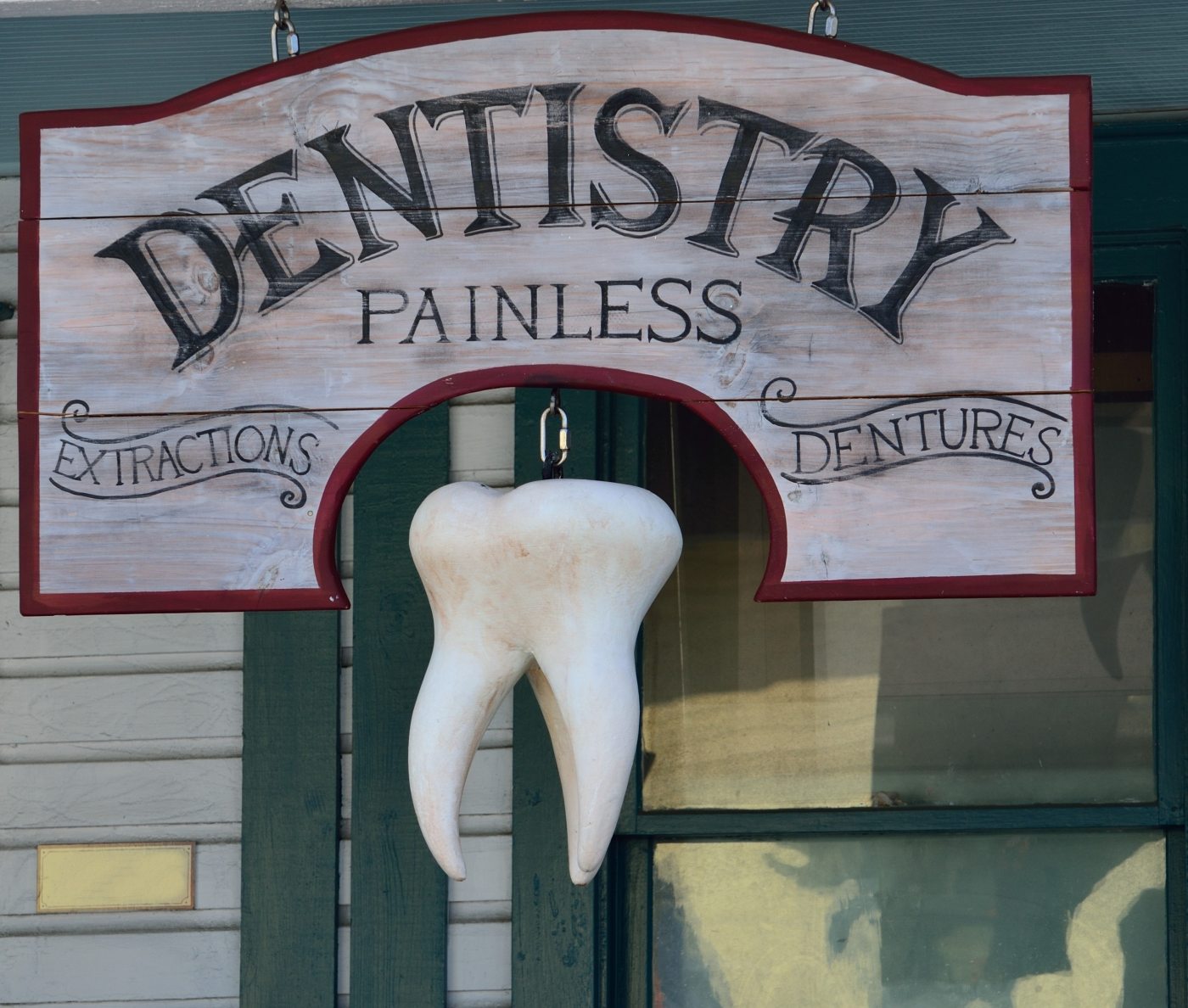
Dental health is a subject that is very near and dear to me, since I used to struggle with dental issues for several years before I found alternative health solutions. I couldn’t figure out why I was still getting cavities even though I thought I had a healthy diet and would brush and floss often. Turns out, there is much more to cavity prevention and healthy teeth and gums than brushing twice per day. With a holistic approach, you have to consider sugar intake, nutrient status, vitamin D levels, the kind of toothpaste you use, brushing habits, and more.
Our teeth were meant to last us a lifetime. Dentures are not normal to have in old age; common, but not normal. People living in cultures without the SAD diet (Standard American Diet) kept their teeth well into their elder years. Read the book Nutrition and Physical Degeneration by Weston Price for the evidence. How many elderly people do you know who have kept all of their teeth? In fact, it’s becoming more common that middle-aged people have some teeth removed due to poor dental hygiene. This is not OK!
Let’s start with an issue that is often overlooked, and what my problem was for sure- low vitamin D levels. You can drink all the milk and eat all the dairy products you want for calcium, but if your vitamin D levels are low you won’t be able to absorb it. If you live in a climate where winter reigns most of the year, you really should be supplementing with vitamin D. And even if you live in a fairly warm climate, I recommend everyone get their levels tested to see where they are at. The medical establishment will say levels should be at least 32, but the Vitamin D Council says at least 50 is optimal. They also sell an at home testing kit if you cannot get tested by a doctor. We cannot get sufficient vitamin D from food alone; at best it’s only present in pasture-raised egg yolks, lard, beef liver, and other animal products, yet for adequate amounts those foods will not be enough.
Our bodies make vitamin D when our skin is exposed to sunlight and is then converted into a hormone before it can be used by the body. Vitamin D can be taken in supplement form up to 5,000 IUs per day if your levels are less than 50, or 2,000 IUs per day if your levels are over 50 to maintain adequate levels. This nutrient is critical for strong bones and healthy teeth, and is my first recommendation if you get recurring cavities. Some people who expose their skin during the summer may find they are still low in vitamin D, which may be due to a low-fat diet. Please note that vitamin D is a fat-soluble vitamin, so be sure you are getting enough good fats in your diet for proper absorption.
Another crucial nutrient that we never hear about is vitamin K2. Also called activator X, vitamin K2 is what moves calcium to where it is needed in the body. It can be found in raw cheese, pasture-raised organ meats, natto (a fermented soybean food), and other pasture-raised animal products. If you have active dental disease and/or cavities, it might be better to supplement with it.
Food
Diet needs another post altogether, yet it is crucial for dental health. Eating an array of vegetables, seasonal fruits, pasture-raised animal products, and healthy fats like coconut oil, ghee, and grass-fed butter will make a huge difference in disease prevention. Basically you should be eating more of these types of foods:


Not snacking constantly between meals will also be a huge help. Giving your mouth a break will help to re-mineralize your teeth and give your digestion a break as well. Every time we eat, our teeth either remineralize or demineralize depending on the nutritional content of the food. Sugar does in fact feed the bad bacteria in the mouth and contributes to tooth decay. This means it’s time to ditch the soda, candy, baked goods from the supermarket, and packaged sweets. And if you chew sugarless gum that contains artificial sweeteners like aspartame, please stop. Immediately. A good chewing gum is one that contains xylitol, which is a natural sugar-free sweetener that actually helps prevent tooth decay. You can find it in health food stores.
We can’t all avoid sweets all the time (I sure don’t), and rest assured there are plenty of healthy alternatives that you can enjoy. A simple search for paleo sweets/ desserts will bring up a ton of recipes. Please note I do not follow a paleo diet but it does offer the best dessert recipes in terms of healthy and low sugar.
Minerals Minerals Minerals
Our teeth are living, functioning structures that take in nutrition like the rest of the body. They not only need calcium but other minerals such as magnesium, phosphorous, zinc, manganese, etc. If you don’t make herbal infusions already, now is the time to start. Nettles is a superstar here, containing both calcium and magnesium along with a host of other minerals. Other herbs to include or mix and match in your infusion are alfalfa, violet leaf, oatstraw, red raspberry leaf, and dandelion leaf.
If you can’t tolerate dairy, some good calcium-rich alternatives are sardines, seaweed, tahini, bone broth, and nettle infusions. Bone broth is superb for bone and dental health due to the collagen and other nutrients it contains and is easy to prepare.
Dental Products
Let’s talk about those toxic dental products. Anything conventional pretty much does nothing for you. I’m not going to get into the fluoride debate, but I will say that for the past 5+ years I have not used anything with fluoride and my teeth have been better than ever. I know several other people who don’t use any products with fluoride and they’re fine as well. I used to have this fear that if I stopped using fluoride toothpaste I would suddenly see a cavity in every tooth. Not so! In fact, people in the days before toothpaste would brush with salt and baking soda and their teeth weren’t falling out. Have you ever read the label on those toothpastes? They contain artificial colors, flavors, and carcinogens. It actually says to contact a poison control center if accidentally swallowed. No, thank you, and please skip the conventional mouthwashes too with the bright green artificial coloring. Same goes for tooth whiteners. I’ll talk about alternatives in a bit.
Brushing Habits
It is important to brush your teeth twice per day and floss as well, as dentists will tell you. Brushing though, should be done gently after you’ve waited at least a half hour after eating. Dental hygienists will give you that advice too, because after you eat your teeth are somewhat softened from the acids present in food and brushing immediately might make it worse on the enamel. When flossing be sure to floss around the structure of the tooth instead of digging into your gums, which will do more harm than good.
A tip that a hygienist once told me- if you aren’t able to brush your teeth a half-hour after eating something sweet, then eat a carrot, celery stick, or green apple to help cleanse the mouth.
You do not want plaque to build up on your teeth for long because it could lead to tartar and eventually gum recession. One helpful thing I’ve found that a hygienist told me is to use an electric toothbrush for better cleaning. I was definitely skeptical but I tell you my teeth felt much cleaner than when brushing by hand. I think it’s worth the extra price. If you want to brush by hand though, just remember to do it gently and not be harsh on your teeth, try to get every nook and cranny, and preferably use a soft bristled toothbrush. Also, replace your toothbrush every three months.
A note about mercury fillings…
It’s trendy right now to advise that mercury fillings should be removed and replaced with a less toxic filling due to the harms that amalgam fillings can cause. Yet, that can be very expensive and not feasible for many people. If you look up mercury toxicity, you’ll see a long list of seemingly never ending symptoms that are linked to amalgam fillings. While this is true for some people, you can always try other holistic approaches first before going that route. You might see your health problems improve after changing your diet, taking supplements, etc., before having to replace all your fillings and going broke in the process. With that said, research as much as you can and if you feel like your mercury fillings are impacting your health, seek a biological dentist to have them removed safely.
The Alternatives
For brushing– I recommend a tooth powder that contains baking soda and unrefined salt, or unrefined salt on its own. To that you can also add clay (such as food-grade diatomaceous clay, white clay, or French green clay), a pinch of powdered herbs (like clove or mint) and a few drops of essential oils if preferred. No need no rinse after brushing, just spit out as much as you can. The only healthy alternative that looks like conventional toothpaste that I have seen on the market is Redmond Earth Paste. Even some natural toothpastes contain glycerin, which sticks to teeth and I don’t recommend any dental products made with it. If you’ve never used a tooth powder to brush your teeth it can take some getting used to but it is worth it. Place a penny size amount in the palm of your hand, wet your toothbrush, scoop the powder on it and brush as you normally would. Your teeth will feel super clean!
A sample recipe can be: 2 TBS. baking soda, 1 TBS. Himalayan salt or Celtic sea salt, 1 tsp. French green clay, and 10 drops of peppermint/spearmint essential oil, or 10 drops of an herbal tincture. Mix well with a whisk in a small bowl and store in a clean glass jar.
For a mouth rinse- There are fancy mouthwashes that you can buy in a health food store, or you can simply mix 2 dropperfuls of an herbal tincture with a little water and rinse your mouth for 30 seconds as needed. You can also use food-grade hydrogen peroxide as a mouth rinse if you feel that it doesn’t bother your teeth. If you want to make your own mouthwash, you can play with different recipes and add a few drops of essential oils to the mix. Just remember that cinnamon and clove essential oils are very strong and too much can burn the mouth if you choose those. A batch of mouthwash can contain a mixture of herbal tea, pure water, and/or herbal tincture in various amounts with essential oils if desired. Some experts will point that because essential oils are potently anti-bacterial, they may kill off some of the good bacteria in the mouth. Something to consider.
A sample recipe: 1 cup of herbal tea, 1/4 cup of filtered water (optional), and 4-5 dropperfuls of herbal tincture placed in a jar and shaken well. Store in the fridge and use within a week.
Oil pulling- This is a technique where you take about 1 teaspoon of coconut oil or unrefined sesame oil and swish it around your mouth for approximately 15-20 minutes to remove bacteria and clean your teeth. Many have found it effective and it’s certainly helpful, though I was never able to swish for more than a few minutes. Try to find the best quality oils for this and when you’re done swishing NEVER spit the oil in the sink or it will clog your pipes, especially coconut oil. Spit out in the trash. You can oil pull several times per week for best results.
Dental Herbs
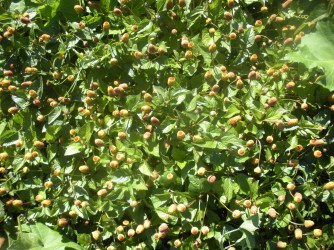 Spilanthes (Spilanthes acmella) is the premier herb for dental health. I had the opportunity to try it fresh a couple years ago and it’s definitely an experience I recommend. It’s actually not native to the U.S. but it can grow here when cultivated. Tasting a piece of the flower or leaf will make you salivate like crazy- no joke. Spilanthes is highly anti-bacterial and anti-microbial. It’s also known as a sialogogue, which means it stimulates saliva. I use the tincture as a rinse on a regular basis, especially after eating something sweet. Just a dropperful with a little water is enough to do the trick. You can make your own tincture or buy it from an herb company, and if you don’t want to use alcohol you can make a tea and rinse with that. I recommend making a small amount of tea at a time, say 1/4 cup or so. You’ll sure feel the tingle!
Myrrh (Commiphora myrrha) is also excellent for dental health and is mostly used as a tincture. I wrote about it in a different post, but I’ll say again that it is wonderful as an astringent for weak or receding gums and for cavities. Make sure to shake it well before using, since it’s a resin. It can also be bought in powdered form and placed directly on a tooth that has a cavity or mixed in some water and used as a rinse.
White oak bark (Quercus alba) is another herb to use if you suffer from receding gums as it is one of the most astringent plants there are. In fact, no one would drink it as a tea to take internally because it is so drying that it can hurt your stomach lining. However, when used a tincture for dental health, it can really help tighten your gums. Place 1-2 dropperfuls of tincture with a little water in a cup and rinse. It’s also sold in powdered form.
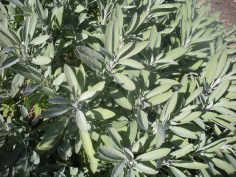 Sage (Salvia officinalis) is another anti-bacterial herb that is drying and healing for canker sores and other dental issues. A standard tea for sage and any other herb mentioned here is 1 tsp. of dried herb for 8 oz. of water steeped for 20 minutes. Sage can also be used as a gargle for sore throats, and is a handy kitchen alternative if you need something in a pinch and can’t get one of the other herbs. It has also been said to be a teeth whitener.
Plantain (Plantago major) can be used on an infected tooth while you’re waiting to see a dentist. If it’s the growing season, do a spit poultice and place some of the mush directly on the tooth and gums, or mash some up if you can’t chew it. Plantain is fabulous for drawing out bacteria and infections from wounds.
After a trip to the dentist…
If you’ve ever gotten your teeth cleaned and felt like your mouth took a beating, make a plantain or calendula tea to rinse your mouth with. While gums might inevitably bleed if someone is poking at them, a dental hygienist should be taking it easy while cleaning your teeth. If they’re not, say something! You can also prepare the tea before you leave so it will be ready for you when you get home. Rinse your mouth several times with the tea throughout the day to speed up the healing process.
Salt is also very healing to gums and can be used as an antibacterial rinse. I remember my mom giving us salt water to rinse our mouths with as kids after we lost a tooth. However, I highly recommend using unrefined salt, which can be found at a HomeGoods or TJ Maxx for a good price. Use about a 1/4 teaspoon of salt per 1/4 cup of warm or room temperature water and rinse for 15-30 seconds. Repeat as needed. This can also be used after a cleaning if you have bleeding gums.
On finding a good dentist…
It can sometimes be hard to find a good, honest dentist who explains all of your options and who you know you can trust. After several years, I was fortunate to find one such dentist in Cambridge, MA who cares about his patients and actually tells you that you can heal a cavity in its early stages in order to avoid a filling. I have heard horror stories from others about dental offices who tried to convince them of unnecessary procedures and may have even lied to them about having a cavity. Just know that you always have a right to a second opinion and be sure to research an issue as much as you can before making a decision.
For example, if you have wisdom teeth that aren’t bothering you, why have them removed? Some dentists will try to tell you that there’s no use for them anyway, but why have a procedure done if it’s not medically necessary? Wisdom teeth removal is a very lucrative business, that’s why they so many people have them removed unnecessarily when they’re in their teen years at the recommendation of their dentist.
It’s also worth looking into alternative therapies that are becoming available now, such as ozone and laser treatments. Ozone therapy prevents cavities from getting bigger if they are still in the outer surface of the tooth, and also helps heal other infections in the mouth. There’s a few dental offices in Massachusetts who have it available. Just note that ozone therapy is not currently covered by insurance, but apparently it’s been in use in Europe and South America for decades.
Some dental products worth trying:
Remineralizing tooth powder, toothbrushes, and great articles- OraWellness
Floss- Tom’s of Maine Naturally Waxed Antiplaque Flat Floss Spearmint
Hydrogen Peroxide – Essential Oxygen 3% Food Grade Hydrogen Peroxide
Toothpaste- Earthpaste Natural Toothpaste Peppermint
For an already made herbal tincture– Phytodent
Where to find local grass-fed products: Eat Wild
*Please note that there is so much more to say about dental health and remedies than what I’ve written here, especially about root canals, bridges, crowns, abscesses, etc. that are beyond the scope of this post. And of course, there’s a ton more herbs that can be used in rinses and mouthwashes that are anti-bacterial. I highly recommend reading the following books for more comprehensive information about dental health.
Sources and further reading:
-Cure Tooth Decay: Heal and Prevent Cavities with Nutrition by Ramiel Nagel
-Dental Herbalism: Natural Therapies for the Mouth by Leslie Alexander and Linda Straub-Bruce.
-Whole Body Dentistry by Mark Breiner
-https://www.vitamindcouncil.org/about-vitamin-d/what-is-vitamin-d/
 A Spoonful of Garlic
Very informative. Thank you.
Thank you, glad you enjoyed it.
A great post, very insightful. Thank you for sharing this.